A wall, a partition, a ceiling or a door physically separates two spaces. That is not enough to separate two RFID read zones: an RFID read can extend beyond that boundary and pick up tags located in an adjacent space.
Treating the wall means aligning the RF boundary with the existing physical boundary.
What determines the treatment
Two factors determine the solution: the nature of the substrate and its geometry.
A regular surface, suitable for a wallcovering, can be treated with ISO 3. An irregular substrate, relief, a frame or a complex shape can be treated with ISO Paint 26, which conforms to the substrate.
In both cases, continuity of the separation remains the determining principle. A correctly treated wall creates a complete RF separation only if openings, glazing, junctions and interfaces with the floor or the ceiling are considered as part of the same boundary.
Products in this family
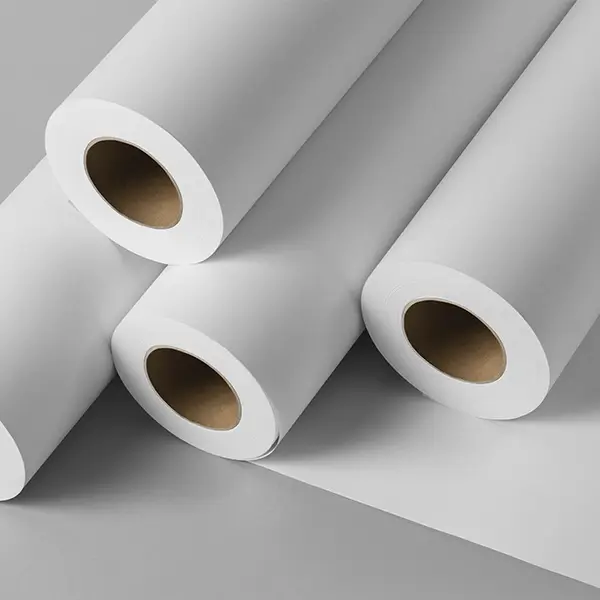
ISO 3, RF shielding wallcovering. Laminate supplied in rolls and installed using standard wallcovering practice. It treats large surfaces: walls, ceilings, floors, partitions and doors.
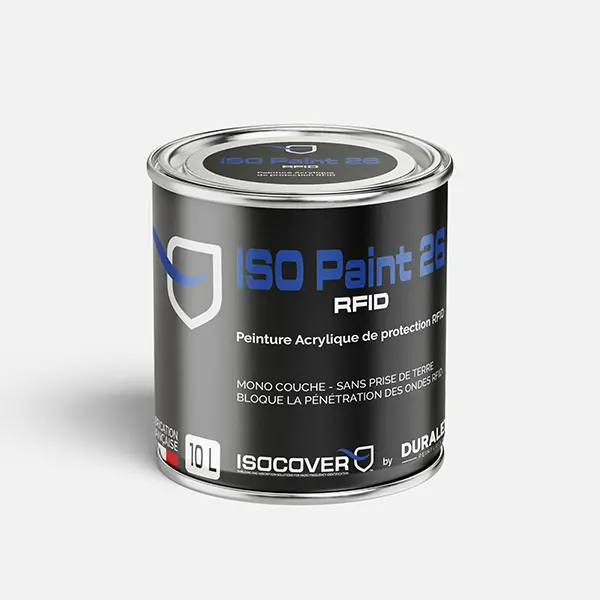
ISO Paint 26, RF shielding paint. Matt black water-based acrylic paint, applied in a single coat. It conforms to the substrate and treats relief, bare concrete, frames and complex shapes.
Interruptions in a treated wall
A treated wall is rarely continuous across its whole surface. Depending on what interrupts it: · an opening or a passageway that must remain usable: see Openings and passageways · a viewing area or glazing to be preserved: see Transparent surfaces · a junction or a closure between two treated elements: see Junctions and interfaces